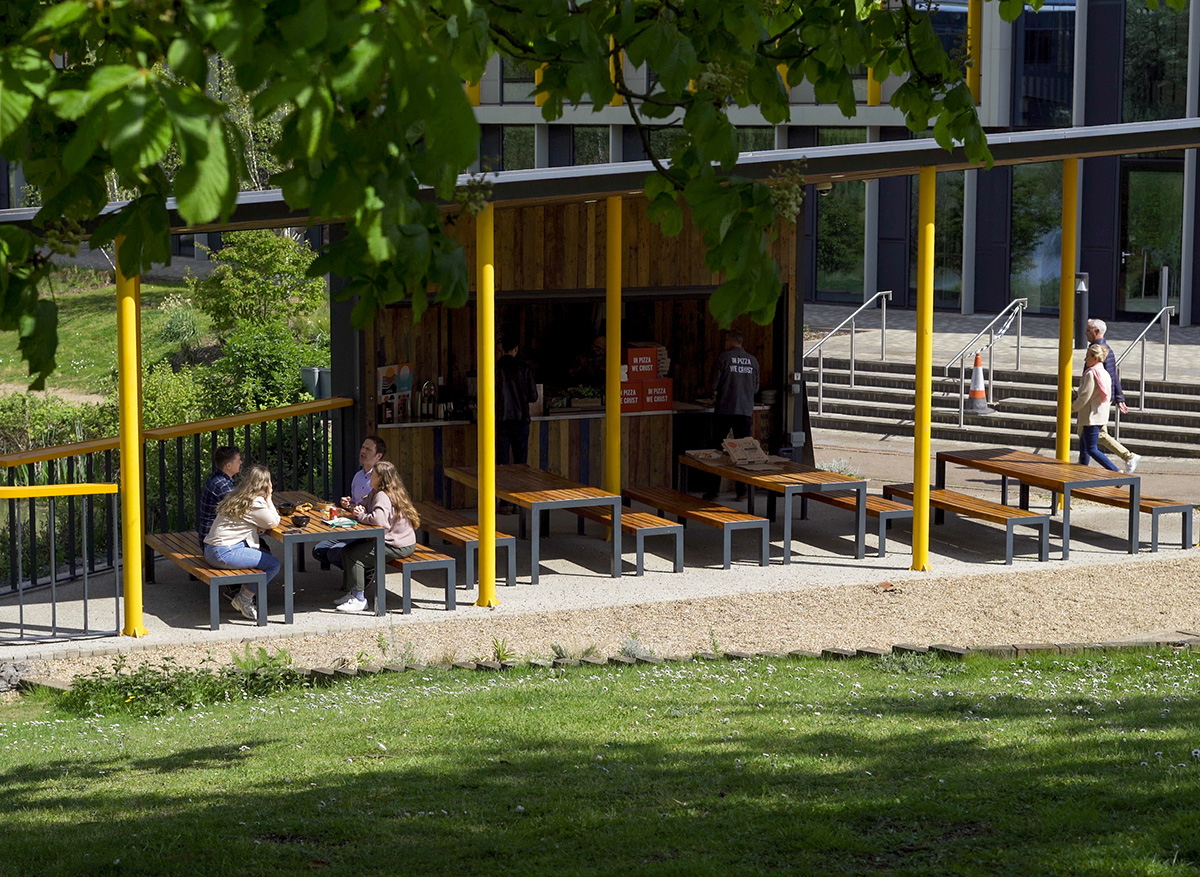
The scene may feel removed from the traditional image of work, yet this is exactly how lunch in the workplace should feel. It is an experience rooted in great hospitality that encourages interaction and a break from routine.
In a world where screens and hybrid schedules dominate, shared moments like these are increasingly rare. The sandwich at your desk or coffee between meetings is giving way to something more intentional. For employers, lunch is no longer simply a convenience; it is an opportunity to enhance wellbeing, nurture collaboration, and strengthen workplace culture.
Hybrid working has changed the purpose of the office It is less a place for solitary tasks and more a space for connection and creativity. The modern workplace is no longer defined solely by what people do at their desks. It is shaped by moments that refresh the mind, spark ideas, and bring teams together. Lunch is a defining moment in an employee’s day, offering a purposeful pause from screens, emails, and meetings. Far from being a routine break, it allows employees to recharge, exchange ideas, and strengthen the relationships that make teams more engaged and resilient.
Across offices today, the food and drink offer is evolving to meet rising expectations. Employees are seeking more than just a convenient bite. According to the 2025 Just Eat for Business report, personalised menus, plant-based options, and health-led choices are no longer considered added benefits, they are baseline expectations. These form the foundation of a modern workplace lunch that fuels both the body and mind.
At the same time, environment matters as much as the menu. Thoughtful lighting, comfortable seating, and communal tables create the conditions for conversation. Food may draw people in, but space determines whether they stay, connect and return. When designed well, workplace dining becomes less transactional and more experiential.
Research from JLL highlights that staff restaurants and cafes are among the most valued office amenities, even as satisfaction with workplace nutrition declines. As more employees return, whether by choice or mandate, lunch is emerging as a key driver of engagement and workplace culture, particularly among younger teams who value experience as much as efficiency.
In hybrid workplaces, lunch has become a shared ritual and a rare opportunity for face-to-face connection. Colleagues reconnect, ideas surface, and small moments of enjoyment strengthen team relationships. Thoughtful menus, inviting spaces, and shared experiences shape how employees feel about their environment and about one another.
Lunch, done well, is more than a meal. It is a pause with purpose, and in a fast-paced working world, that pause can have extraordinary impact.