Most of what we buy today is designed to remove seasonality entirely. Supermarkets offer the same produce in January as they did July, regardless of whether it is naturally at its best. But once you start to notice where food comes from and when it should taste at its best, something shifts. You begin to see food less as something fixed in place and more as something that changes through the year.
The easiest place to start is not with constraint and rules but with observation of what’s around you. Here are some steps on how to get it right.
Look at where your food is coming from
One of the easiest signals of seasonality is origin. If your vegetables have travelled across continents, there is a reason they needed to. In many cases, there is a closer, better alternative that is in season locally. It’s not about restriction, but about choice. If something is not in season locally, it’s your moment to pause and choose something else rather than defaulting to an imported version that has been grown for availability rather than flavour.
As time goes on, this small habit changes how you’ll shop. You move away from asking ‘Can I get this?’ and move to ‘Is this the right time for it?’.
Following abundance, not availability
Farmers’ markets, local greengrocers and even supermarket seasonal displays all tell the same story when you’re paying attention. What’s taking over the shelves is often what is in season.
When you begin o shop this way, your meals will naturally begin to shift. Your spring meals will become lighter and greener. Your Autumn moves towards roots and deeper flavour. In short, winter simplifies and summer expands.
You are no longer building meals from a fixed list of ingredients; you’re now responding to what the season is offering.
Start substituting, not eliminating
Eating seasonally does not mean you need to remove ingredients entirely. It means adapting.
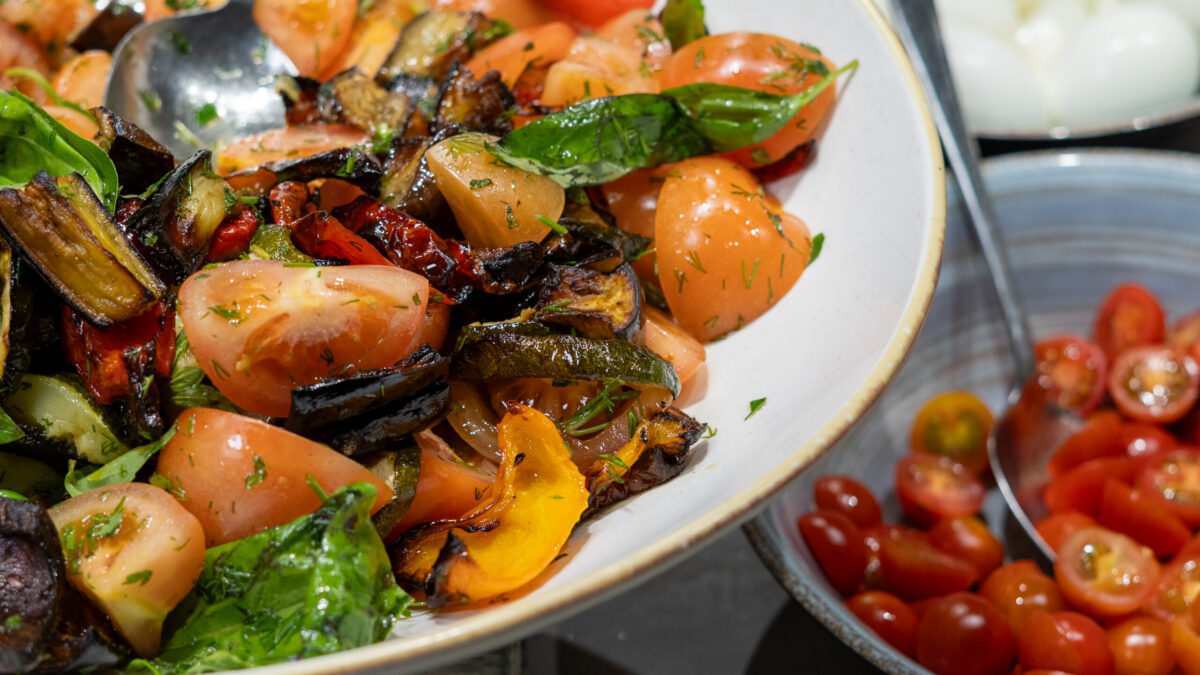
If a recipe needs an ingredient that is out of season, swap it for what is currently at its best. Most dishes are flexible. Tomatoes in summer can be replaced with squash in Autumn; Courgettes might become leeks. The structure of the dish remains, but the character changes with the season.
This is where seasonal cooking starts to feel natural. You are no longer forcing ingredients into dishes; you’re letting them lead the way.
Pay attention to taste
One of the easiest ways to understand seasonality is simply to notice when something tastes great, and when it does not.
A strawberry in summer is not the same as a strawberry in winter. One is grown as its natural peak, the other is grown to survive transport and time. The difference is not small when you notice it.
Taste should become a guide for you. Over time you’ll instinctively know when something is in season, because it tastes like it should.
Small shifts, lasting change
You do not need to change your entire diet to eat seasonally. In fact, trying to do that often makes it feel harder than it is. Start with one season, one habit, one change in how you shop or cook.
Even small shifts begin to reconnect with timing. Once that awareness builds, it becomes harder to ignore.
Why does it matter?
Eating seasonally is not about restriction; it’s about reconnecting food to time. It should encourage adding variety into your diet with little effort. Improving flavour without complication and bringing a sense of rhythm to something that often feels constant and disconnected.
It’s time to stop eating everything all the time and start eating the right things are the right moment.